Christianity and the Iranian Conflict

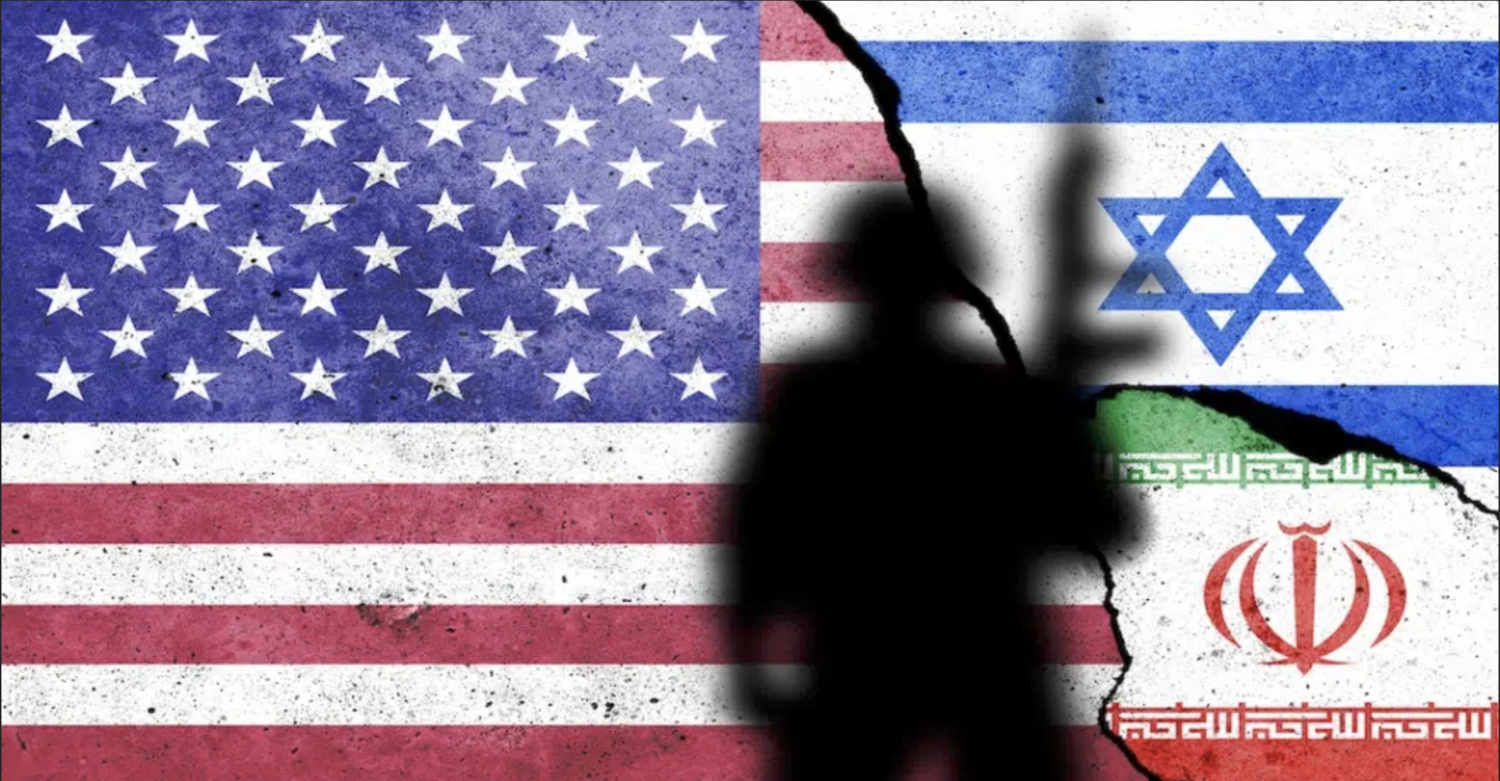
Tensions involving Iran have once again dominated headlines. Military actions, proxy conflicts, and political rhetoric remind us that we live in a broken world. As Christians, and specifically as Lutherans in the Missouri-Synod, we should think carefully and biblically about what’s happening. This isn’t simply a geopolitical issue. It’s a theological moment and how we respond reveals what we believe.
Governing Authorities and Romans 13
In his Epistle to the Romans, chapter 13, the Apostle Paul writes that “there is no authority except that which God has established”. Government is not an accident of history. It’s part of God’s ordering of a fallen world. The state bears the sword to restrain evil. That includes the right, and at times the obligation, to use force.
The Lutheran tradition has historically affirmed what’s often called the doctrine of the Two Kingdoms. God rules His right-hand kingdom through the Gospel, through Word and Sacrament. He rules His left-hand kingdom through civil authority, through law, order, and, when necessary, the sword. On a smaller scale, the sword can be seen in arrests, courts, and convictions. On a larger scale, the sword can be seen in military conflicts that involve nations defending themselves from attack or, preemptively, fighting oppressive, dangerous, and evil regimes.
This means Christians can recognize the legitimate role of governments in matters of defense without confusing that role with the mission of the Church. The Church does not wage war. The Church proclaims Christ crucified. Governments may use force; the Church uses the Word of Jesus.
This doesn’t mean however, that Christians render blind obedience to the state. Paul’s Epistle to the Romans teaches that governing authorities are established by God, but that same Scripture makes clear that all authority is accountable to Him. The government is God’s servant, not God itself. When civil rulers act within their proper vocation, restraining evil and promoting good order and the welfare of its citizens, we honor and obey them. But when they command what God forbids or forbid what God commands, Christians must remember that “we must obey God rather than men” (Acts 5:29). Our ultimate allegiance is not to a flag or political party, but to Christ.
The Lutheran distinction between the two kingdoms helps here. God governs through civil authority in the left-hand kingdom, but He governs the Church through His Word in the right-hand kingdom. When the state steps outside its lane, when it attempts to redefine moral reality, silence the Gospel, or sanction what Scripture calls sin, the Church does not become rebellious, but it does become clear. We retain the right, and at times the duty, to “speak the truth in love” (Ephesians 4:15). Respectful criticism is not disloyalty. It’s an acknowledgment that every ruler stands under the judgment and mercy of God and every Christian is subject to His Word, responsible for speaking the truths of Jesus, as well.
Jesus says in the Gospel of John, chapter 17, that His people are “in the world” but not “of the world.” This means Christians live fully engaged in our earthly vocations as citizens, workers, neighbors, yet our identity isn’t defined by culture, politics, or national borders. Through Baptism, we belong first to Christ.
Lutherans describe this as citizenship in the two kingdoms mentioned above. We are citizens of earthly nations, accountable to civil authority. But we are, above all, citizens of the kingdom of God. That kingdom is primary. Earthly citizenship is temporary; Christ’s reign is eternal. When tensions arise between the two kingdoms, our loyalty to Christ should be the driving force that governs our conscience and shapes our response to any world event.
The Christian Call to Peace
At the same time, we must never become casual about war. Our Lord Jesus Christ is the Prince of Peace. He tells us, “Blessed are the peacemakers.” Christians don’t romanticize conflict. War is always evidence that sin is at work and we live in a fallen world.
The Lutheran Confessions allow for just wars in defense of the neighbor. But “allowed” does not mean “celebrated.” War is tragic even when it’s necessary. Every bomb dropped represents a breakdown of human fellowship. Every casualty of war was created by God and someone Jesus died to save.
So, we pray for peace. Not as naïve idealists, but as people who know what violence costs. We pray that conflicts involving Iran would be restrained, de-escalated, and resolved with as little bloodshed as possible. Peace is not weakness. It’s a fruit of God’s ordering grace in the world.
Islam, Christianity, and the Hope of Salvation
It’s also impossible to ignore that Iran is an Islamic republic. There is a genuine theological divide between Islam and Christianity. Islam denies the Trinity and the full divinity of Christ. It rejects the crucifixion as the atoning sacrifice for sin. Christianity confesses that Jesus is true God and true man, crucified and risen for the salvation of the world. These are not minor differences. They are foundational truths.
Yet we must be careful. Political conflict is not the same thing as a crusade. Our struggle is not, “against flesh and blood but against the rulers, against the authorities, against the powers of this dark world and against the spiritual forces of evil in the heavenly realms (Ephesians 6:12). The Church’s mission toward Muslims, including those in Iran, is not hostility, but witness. “God wants everyone to be saved and come to a knowledge of the truth” (1 Tim 2:4).
We confess that Christ died for all. We desire that all would be saved. This includes not only those of the Muslim faith, but political leaders and the soldiers on every side as well. Christians don’t hope for destruction; we hope for repentance, faith, peace, and ultimately the salvation of those who are far from Jesus.
It’s worth remembering too, that there’s a growing Christian presence inside Iran, often under persecution. The Gospel is not, and should not, be bound by borders or regimes.
Are We Near the End?
Whenever tensions flare in the Middle East, someone inevitably asks: “Is this the end?”
Our Lutheran approach to the end times is intentionally restrained and biblical. We reject speculative timelines. We reject attempts to map current events directly onto apocalyptic imagery. We confess what Scripture clearly teaches: Christ will return bodily, visibly, and unexpectedly. No one knows the day or the hour, not even Jesus in his humanity (Matthew 24:36).
Wars have occurred in every century since Pentecost. The Roman Empire fell. Europe tore itself apart in two world wars. Entire civilizations have collapsed. Each generation has faced conflicts that felt world-ending, many of which were bigger and saw more casualties than any war we’ve experienced in the last fifty years.
There’s no question, this conflict is serious. But it doesn’t place us any closer to the Last Day than any previous conflict, skirmish or war. The Church has lived under persecution, empire, revolution, nuclear threat, and global war. But Christ has not yet returned. We live in the “last days” in the biblical sense, meaning the entire period between Christ’s ascension and His return are the last days. But we don’t claim special insight into divine timing. Fear-based speculation is not faith. Watchfulness is.
How Then Should We Live?
First, we pray. We pray for peace and restraint. We pray for Christians in Iran and the innocent. We pray for our soldiers. We pray the "need" for nuclear weapons, ends. We pray for wisdom among leaders. We pray for repentance, forgiveness and salvation for all who are far from Jesus.
Second, we remain grounded in our vocations. Parents parent. Workers work. Pastors preach. Citizens engage responsibly. We don’t abandon daily faithfulness because headlines are loud. We live by faith in the risen Christ who will come again on the last day and bring forth a new heaven and earth that is without stain, spot or blemish.
Third, we remember that Christ reigns. Not Tehran. Not Washington. Not any military alliance. The crucified and risen Christ. The cross looked like geopolitical chaos once as well. Rome, Jerusalem, religious conflict, political fear, all converged on Golgotha nearly two thousand years ago. And through that apparent disaster, God accomplished salvation for the world through the death of His Son, our Savior, Jesus Christ.
The world is broken and unstable. It has been since Eden and always will be, at least and until Christ’s return. But the kingdom of Christ is not shaken. That’s where our confidence rests. Not in military outcomes or political predictions, but in the crucified and risen Lord.
Until He returns, we pray what we’ve always prayed: Lord, have mercy. Christ, have mercy. Lord, grant us peace. Amen!